- +86 (0) 20-86655668
- info@gionar.com

English


English
March 24 , 2026
Kate Spade New York is a fashion brand originated from the United States, founded in 1993 and headquartered in New York, USA.
Starting with handbags, Kate Spade gradually expanded into accessories, shoes, perfumes and other fields. Its design style combines classic and playful elements, targeting young urban women who pursue fashion and good value for money.
Some of the early Kate Spade bags were produced in the United States, but as the brand grew in size and the global supply chain developed, most of the products gradually moved to other countries for production.
The main responsibilities of Kate Spade at its headquarters in the United States include product design, brand management and marketing. The actual production and manufacturing are distributed across multiple countries and regions around the world.
This post will explore which countries produce Kate Spade bags.
The production location of Kate Spade bags is not limited to a single country or region. The brand produces its products globally based on different series and product types.
Although Kate Spade is an American brand, most of its leather goods and accessories are manufactured in countries such as China, Vietnam, and India.
The global supply chain model is quite common in the fashion industry, aiming to balance costs and efficiency while ensuring that products meet the brand standards. Although the production locations may be scattered, the brand maintains product consistency through strict quality control systems.

| Country | Common Types of Bags |
| China | Most leather bags, saffiano leather, nylon totes, core collection |
| Vietnam | Many everyday bags, fabric & synthetic leather styles |
| Indonesia | Casual bags, lightweight styles, seasonal collections |
| Philippines | Woven bags, straw, rattan, and some fabric styles |
| Italy | Premium leather collections, higher-end leather designs |
| Cambodia | Basic bags, accessories, entry-price styles |
It is worth noting that the production location does not directly affect the quality of Kate Spade bags. Regardless of where they are produced, Kate Spade adheres to uniform quality standards and process requirements to ensure that the products meet the brand’s high-end positioning. Through strict supplier management and quality control systems, the Tapestry Group guarantees that Kate Spade bags produced globally maintain consistent high quality.
| Channel | Method |
| Official Website Product Page | Origin info usually in “Details” or “Materials & Care” section |
| Physical Store | Ask staff, check hangtag |
| Customer Service | Provide SKU or style name, official customer servicer can query |
| Secondary Market Platforms | Request seller to photograph care label |
Yes, Kate Spade does produce some of its products in China. As a global affordable luxury bag brand, its production facilities are spread across multiple countries, and China is one of the key production bases.

Kate Spade’s decision to manufacture in China was a comprehensive business choice made by the brand, taking into account cost control, supply chain efficiency, and its global strategic layout.
| Core Reason | Specific Explanation | Key Information & Data |
| Cost Control & Supply Chain Advantages | China has the world’s most complete and efficient supply chain system for leather goods. Highly concentrated industrial clusters (such as Guangdong and Fujian) significantly reduce procurement and logistics costs, while ensuring production efficiency and quality. | Manufacturing in China can reduce logistics costs by 30% to 40% compared to Western countries; defect rates can be controlled to below 0.5%, approaching the level of European factories. |
| Part of a Global Production Strategy | The brand does not rely solely on China, but rather employs a global production strategy, dispersing production locations based on the positioning of different collections to balance cost, quality, and flexibility. | Production bases span 15 countries, including China (core/nylon bags), Vietnam (balancing cost and quality), Italy (high-end leather series), and the Philippines, among others. |
| Historical Transition in Brand Development | China is transforming from a “production base” to a “core consumer market.” To mitigate trade risks and stay close to the market, the brand began shifting some production capacity to Southeast Asia over a decade ago. | A Tapestry CEO once stated that Kate Spade’s production proportion in China had dropped to less than 5%; 2025 data also shows that most production has been relocated to Vietnam, Cambodia, and other locations. |
| Time Node | Decision | Result |
| 1990s–2000s | Brand founding period chose Chinese OEM | Established “American design + Asian manufacturing” accessible luxury model |
| 2007–2017 | Liz Claiborne/Tapestry period strengthened Asian supply chain | Cost optimization, supported Outlet expansion and discount strategy |
| 2018–2020 | US-China trade friction, partial capacity transfer to Vietnam | China share dropped from 75% to 60%, but core capacity retained |
| 2020–Present | China + Vietnam dual centers, high-end line reshoring to Italy | Balances cost, tariff, and brand positioning triple goals |
| Consideration | China Advantage | Relocation Cost |
| Craftsmanship Depth | Complex splicing, embroidery, special coating technology mature | Vietnam/Indonesia currently only capable of basic styles |
| Response Speed | Sampling 7–10 days, bulk production 30 days | Europe 60–90 days, misses seasonal windows |
| Flexible Production | Small batches (500 MOQ) fast return | Europe high MOQ, unsuitable for test styles |
| Quality Stability | 95%+ Quality rate | New origin ramp-up period 80–85% Quality rate |
| Infrastructure | Ports, electricity, digitalization mature | Southeast Asia logistics bottlenecks, frequent power outages |
| Brand | China Manufacturing Share | Strategic Similarity |
| Coach | ~50% | Same China + Vietnam + Europe layout |
| Michael Kors | ~60% | More dependent on China, aggressive cost control |
| Tory Burch | ~40% | Higher Europe manufacturing share, slightly higher positioning |
| Longchamp | ~30% | France domestic + Tunisia + China, emphasizes European heritage |
In this case, “Made in China” does not imply poor quality. Kate Spade strictly adheres to quality control standards regardless of where it is produced. On the contrary, if a seller claims that a new Kate Spade handbag is “Made in Italy” or “Made in the United States”, it is likely to be a fake – the brand has never conducted large-scale production in these countries over the years.
Yes, Kate Spade does produce a portion of its bags in Cambodia. This is actually part of its global production strategy, and many different styles can be identified as being made in Cambodia.
Cambodia is one of the production bases for Kate Spade, mainly producing basic, entry-level, and casual style products.
You may come across the label “Made in Cambodia” in fabric handbags, simple leather handbags, and some seasonal/daily collections.
This is part of the brand’s global sourcing strategy (along with countries such as China, Vietnam, Indonesia, Italy, etc.).
Please be sure to check the internal leather/breathable fabric label to confirm the exact country of origin.
| Product Name | Main Material | Product Model |
| Grace Shoulder Bag | Leather, Fabric | KJ8980 |
| Shopper Bag | Calfskin | KK8270 |
| Spade Icon Small Barrel Bag | Calfskin | KK5710 |
| Bag Type Shopper | Fabric | KK8070 |
| Nouveau Mini Saddle Bag | Calfskin, Fabric | KL6260 |
| Deco Adjustable-strap Tote Bag | Calfskin | KN091 |
Cambodia, along with Vietnam and the Philippines, constitutes approximately 70% of Tapestry Group’s production capacity and is the most important production region outside of China.
The factories in Cambodia mainly produce mid-to-high-end bags, including classic models and seasonal new products.
A report in August 2025 showed that Tapestry Group’s revenue in the Greater China region increased by 5% year-on-year, with Kate Spade contributing 4% of the revenue, and a large proportion of these products came from the factories in Cambodia.
The clothing, footwear, and travel goods industries are important drivers of Cambodia’s economic growth and the largest source of foreign exchange earnings. In 2024, the export value of related products reached 11.66 billion US dollars.
This industry has approximately 1,538 factories in Cambodia, employing over 910,000 workers, most of whom are women.
As an important global base for bag production, Cambodia’s manufacturing output now accounts for more than 70% of the global share.
Products purchased from official channels will have the place of origin information marked on the inner label or wash label. Those produced in Cambodia usually state “Made in Cambodia”.
The product number may contain specific identifiers. For example, the item numbers of some bags produced in Cambodia start with “PXRUB”.
The Kate Spade bags produced in the Cambodia factory maintain the same high-quality standards as those worldwide, including:
Yes, Kate Spade’s bags are manufactured in Vietnam, and this accounts for a significant portion of their production volume. Moreover, this proportion is continuing to increase.
It should be emphasized that the origin does not determine quality. Products produced by Kate Spade in Vietnam also follow global unified quality control standards, using high-quality leather and hardware components. The brand ensures that regardless of where the products are produced, they can meet its design aesthetics and durability requirements through strict supplier management and quality inspections.
No. The Tapestry Group implements a global unified quality standard. No matter where the bags are produced, they must go through the same quality inspection process.
The factories in Vietnam have passed the strict inspection procedures of the Tapestry Group to ensure that the production process and quality control meet the brand requirements, and the product quality is consistent with that in the US and European markets.
| Aspect | Details |
| Production share | ~20% of total output (industry estimate, 2024) |
| Product categories | Mid-range handbags, footwear, some accessories |
| Growth trajectory | Increasing since 2018–2019 |
| Strategic purpose | Tariff diversification, cost optimization, China+1 strategy |
| Period | China | Vietnam | Strategic Driver |
| 2015–2017 | ~75% | ~10% | China dominant, Vietnam emerging |
| 2018–2020 | ~65% | ~20% | US-China trade war, tariff avoidance |
| 2021–2024 | ~60% | ~25% | COVID disruptions, further diversification |
| 2025–projected | ~55% | ~30% | Sustained China+1, Vietnam capability maturation |
| Location | Label Text |
| Interior sewn care tag | “Made in Vietnam” |
| Product hangtag | May state origin, but not always |
| Official website | “Details” section under specific SKU |
Yes, Kate Spade bags are indeed manufactured in the Philippines, and the Philippines is one of its key manufacturing bases. Together with Vietnam and Cambodia, it constitutes approximately 70% of the Southeast Asian production capacity of the Tapestry Group (the parent company of Kate Spade).
| Product Name | Main Material | Product Model / Feature |
| Ava Pouch Bag | 100% Leather | KK7180 |
| Serena Foldover Top Shoulder Bag | 100% Leather | KL6380 |
| Kristi Structured Pebbled Leather Flap Crossbody Bag | Pebbled leather | 63354 |
| Pair of Woven Handbags | Straw | with removable cover |
| Factor | Philippines Situation | Kate Spade Requirements |
| Luxury leather goods ecosystem | Limited; strength in garments, electronics | Needs integrated leather, hardware, packaging supply chain |
| Tapestry Group presence | None documented | No Coach, Kate Spade, or Stuart Weitzman manufacturing listed |
| Regional competition | Vietnam, Indonesia, China dominate ASEAN luxury OEM | Philippines not cost-competitive for this tier |
| Brand positioning | $150-400 accessible luxury | Philippines manufacturing associated with lower-cost segments |
| Scenario | Explanation |
| Counterfeit products | Fake bags may claim “Made in Philippines” to appear legitimate |
| Mislabeled secondhand items | Previous owner error, altered tags, or mistaken identity |
| Other brands | Some entry-level or fast fashion brands do manufacture in Philippines |
| Component speculation | Possible minor hardware sourcing, but not final assembly |
Yes, there is evidence suggesting that some of Kate Spade’s products are manufactured in the United States. However, this is only a small and specific part of its overall production scale, and not all of its products are manufactured in the US.
Although Kate Spade originated in the United States and some of its high-end products may be manufactured there, its product line has now achieved global production, with major production locations including China, India, the Philippines, and other countries.
The Kate Spade brand is centered on New York design and achieves production through a global supply chain.
| Source / Item | Details | Key Information |
| Amazon Product Listing | Kate Spade Staci Square Crossbody | Explicitly states “Made in the USA and Imported” in product details. |
| Brand History (1990s) | Early manufacturing | Founders initially sourced American factories in Brooklyn and elsewhere to produce their first bags. |
| Historical Facility | 1995 New York store | The brand’s first store on 29th Street in NYC had “manufacturing capabilities” on-site. |
There are Kate Spade handbags produced in the United States, but the majority are in retro styles.
From the product listings on eBay, it can be confirmed that some Kate Spade handbags are manufactured in the United States, but the majority are in the 90s retro styles. The specific features are as follows:
Kate Spade is positioned as “affordable luxury” – offering designer-style products at prices typically ranging from $150 to $450. Producing in the United States (due to higher labor, material, and regulatory costs) would significantly increase retail prices, which conflicts with the brand’s market positioning.
Over 95% of handbags sold globally (including those of mid-range brands and even some luxury brands) are produced in Asia. This is a standard practice and not a sign of poor quality.
The Asian factories have decades of experience in producing high-volume, high-quality leather products. Their stitching, hardware, and surface treatments all meet Kate Spade’s standards, and this is managed by the parent company, Tappst. These factories have such professional capabilities that they are capable of meeting Kate Spade’s production requirements.
In the early 1990s, during the brand’s launch phase, there was a possibility that small batches or prototype products were assembled in the United States.
However, as demand grew rapidly, by the mid-to-late 1990s, production was shifted overseas to achieve efficient large-scale production.
There is currently no evidence to suggest that Kate Spade handbags were produced in the United States on a sustained or recent large-scale basis.
The competition in the luxury-style market is becoming increasingly fierce, with traditional luxury brands and emerging domestic brands engaging in a battle that is reshaping the industry’s competitive landscape. Sandeep Seth, the Chief Growth Officer of Tapestry Group, believes that the Chinese market remains a key growth market and will be the biggest growth opportunity in the coming years.
Tapestry Group is advancing its ESG strategy, including the use of recyclable materials and reducing carbon emissions. Its brand COACH has launched an eco-friendly subsidiary brand, Coachtopia, and Kate Spade may incorporate more sustainable elements into future products.
Kate Spade adopts a global production strategy, and its products are not manufactured in a single country. Kate Spade’s products are usually designed and managed in the United States, while the production is completed in multiple countries around the world.
China is Kate Spade’s largest production base. The proportion of products made in China is approximately 60%, including core best-selling items such as nylon tote bags and Saffiano leather items. Vietnam accounts for about 20-25% and is showing an increasing trend; Indonesia accounts for about 10%, mainly producing accessories and small leather goods; Italy and Spain account for only about 5%, limited to high-end leather series. There is very little production in the United States itself, less than 5%, and it is only for samples or special custom orders.
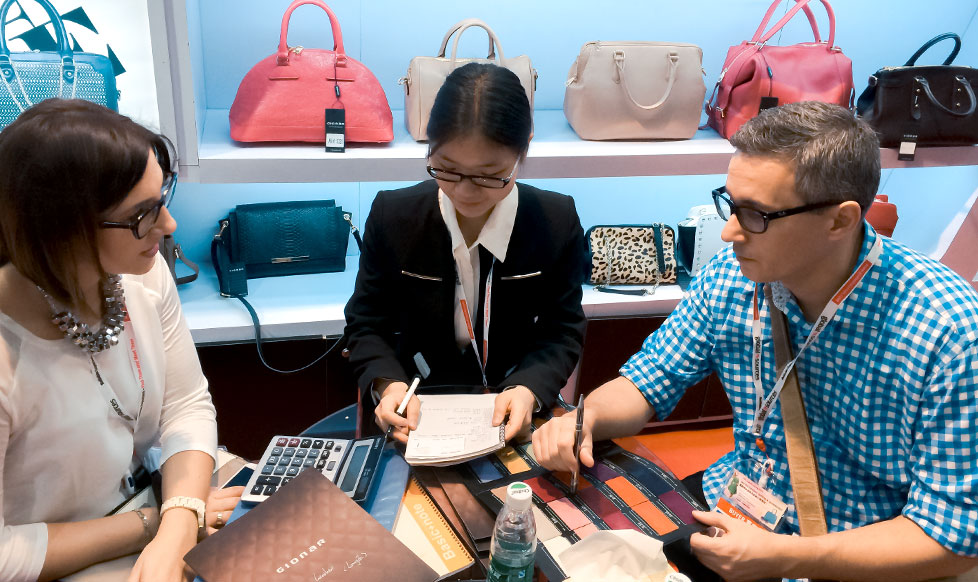
If you are running your own bag business and want to customize bags of the same quality as Kate Spade, please contact Gionar. We will create high-quality bags for your brand.

Previous :
What Is Kate Spade? Is It A Good Brand & Popular?Next :

Mobile Website

Inquires Whatsapp